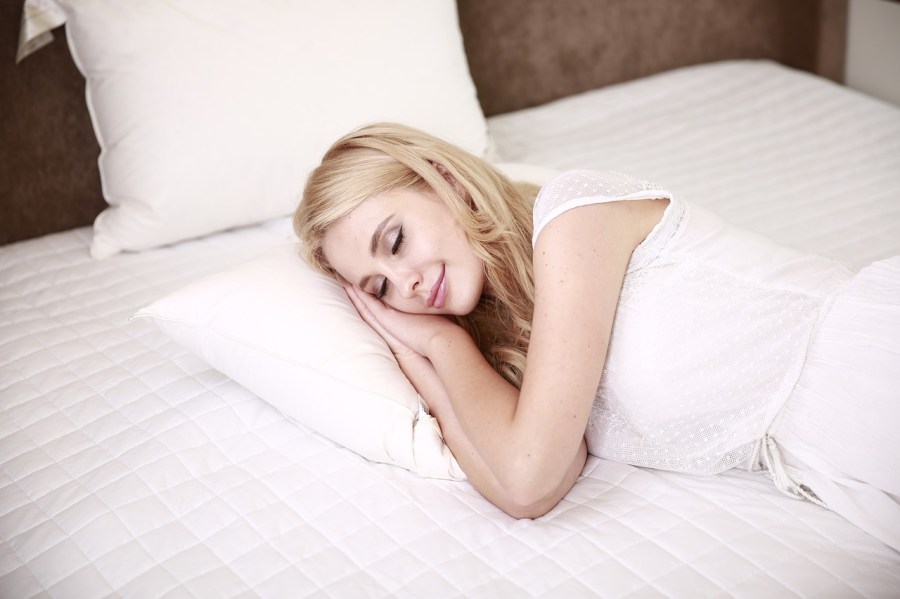
A fact which I have always found interesting is that “insomnia” is considered one of the most commonly diagnosed and medically treated ailments in the America today. In many cases, people try for years to find a way to get a good night’s sleep. Many Americans even depend on powerful prescription medications every night to force them to sleep and stay asleep.
Initially, the majority of people may reach for over the counter remedies such as melatonin or Benadryl or Tylenol PM. Some find themselves even using alcohol or pot to help get them to sleep.
If the sleeplessness gets out of hand, many people then turn to the many powerful prescription medications on the market which they can get from their doctor. Unfortunately, most of those have unpleasant side effects which many patients find intolerable; such as grogginess or the feeling of drunkenness throughout the next day. Not good.
Here at my office, I would say that about 25% of my patients mention sleep as a major concern of theirs. And with good reason; not only is chronic insomnia annoying, but the lack of sleep is linked to many serious issues including increased accidents, higher divorce rates, clinical anxiety and depression, difficulties with work and family life, etc. There is also the myriad of medical issues from heart disease to diabetes, chronic pain and even cancer.
Of course Acupuncture is very good for chronic insomnia, but whenever someone brings up insomnia, I also tell them about these other “free” therapies that they can use at home. Sometimes these 13+ tips are all that they need. If you want more info on any of these, just let me know.
- 1. “8 hours of solid sleep” is just a myth. The idea of falling asleep and waking up 8 hours later is simply that; a myth. In several ways. Humans are simply not designed to sleep 8 solid hours. We naturally slip in and out of deep sleep throughout the night and occasionally “wake up” to look around and check on the overall safety of our environment. This is an evolutionary thing. Imagine if our cave man ancestors were to “check out” for 8 straight hours, they might wake up the next morning surrounded by a family of lions. Research shows that bubbling up and down throughout the night and briefly waking up from time to time throughout the night is considered a completely natural and healthy thing. So I think that it is important to start with the right expectation for what a “good night sleep” actually is. Some people have a misconception of what a good night sleep actually is. If you occasionally rouse a few times each night and then fall straight back to sleep, this is in all likelihood, completely normal and not a sign of insomnia.
- Lights. Many of you have heard of “light hygiene”. This is where you snuff out all of the lights in your bed room and have thick curtains to create a pitch black environment. For some people, this is more important than others. For example, I remember years ago when I was in the Air Force working nights, I would come home in the morning and sleep all day laying in the sun by my large picture window which was wide open. I slept like a baby. Today, things are a bit different. Now, I am much more sensitive to lights in my bed room. Even the dim light from the alarm clock or that dim street light from 3 blocks away can annoy and disrupt my sleep as I lay in bed and it shines right in my eye when the shade is open an inch or two. So if you have noticed getting annoyed by tiny light sources (no matter how small), cover them up so they don’t bother you. On a related topic, keep tvs and cell phones and tablets out of the bed room. The bright lights (no matter how low you turn down the screen) agitates and excites the nervous system, leading to more insomnia in many people. Also, statistically, having a TV in your bedroom leads to having only half as much sex. If that is something you are interested in, then just know that (good) sex is one of the best sleep aids for both men and women. So get rid of the TV.
- Sleep with Other People or in Groups. Humans are social animals. That is how we evolved. Our direct ancestors only survived because of their ability to group together for strength and safety. If your great great, great, great grandfather was a loner who slept outside the camp, he probably would have eventually gotten himself eaten by a predator and you would not be here right now. Being social is necessary for survival. It’s a great example of how our social behaviors are also part of our evolution. Think of this; who would survive longer? A person living by himself on the savannah or a group of people sleeping in a tight group? Correct. The group. This is especially important at night time when many predators are out and about. Us humans have been shown to naturally sleep more soundly when in a group than when alone. It’s hardwired into our nervous system after hundreds of thousand of years of survival and evolution. Even today, researchers see this. In a recent article looking at the sleeping habits of Tanzanian nomadic tribes, researchers found that over any given night, there is only a total of 18 minutes where all 33 members of the tribe are asleep. At any given moment one of the tribe members has stirred from slumber and is being aware of their groups surroundings and its safety. We depend on each other to ensure our safety and we sleep better knowing that someone is there to help protect us from dangers while we sleep. This is majorly important in dangerous times. Of course, your modern brain cannot differentiate between lions and tigers and the scariness of things like personal money problems or personal family concerns. So keep in mind that you will actually sleep better when you have other people nearby.
- Sleep With A Dog. A similar study showed that sleeping with dogs also improves the depth and quality of sleep…. with the obvious caveat. For the same reasons mentioned above, if you have a dog nearby sleeping with you, they are a natural “sentry” who will alert you of any potential danger at night. We have evolved along side dogs for millennia and even modern studies have shown that people sleep more sound when sleeping with dogs. The caveat is that you have to have the “right” dog. If you have the “wrong” dog, he will be yippy, snoring, barky and hog the blankets, this will obviously disrupt your sleep more than help it. It is just as easy that a dog will disrupt sleep, so make sure you have the “right” dog to sleep with.
- Protein. Eat some protein before bed. This will help stabilize your blood sugar levels throughout the night. Many people eat their carbohydrate rich dinner at 5 or 6 pm and then not again until when they wake up 12+ hours later. Or they eat a carbohydrate high snack just before going to bed. Both of these habits are a recipe for insomnia. When we eat a typical meal, our blood sugar goes up….and then goes down… leaving us hungry. Well, what happens if your blood sugar drops to too low levels at 1 am? You naturally wake up feeling a bit nervous and shaky… and during the middle of the night, the brain isn’t often thinking straight enough to realize that its just hungry. Often times the person wakes up feeling nervous and doesn’t even feel hungry… even though that is the root issue. The way to prevent this is to get off of this “blood sugar roller coaster” and eat some hearty protein before bed (and avoid sweet carbohydrates such as breads, cereals, cookies, juice, etc; those things will aggravate your sleep). Instead, choose things such as meat, hard cheese or a protein shake as a bedtime snack. This will keep your blood sugar levels at a much more even keel throughout the night. I cannot tell you how many people have told me this works.
- Wear socks to bed. No one can quite explain this odd phenomenon, but research has shown that wearing socks to bed results in a deeper, more restful sleep. While other research shows that sleeping in a cooler environment is helpful, it seems that the feet prefer the cuddling and cozy feel that socks provide. So keep your bed room on the cooler side, avoid any drafts (such as from fans or air conditioners) and wear socks.
- Mediation will help you sleep. Many studies suggest that a daily routine of meditation leads to better sleep. This may be due to meditation’s ability to mitigate all of our stress hormones such as cortisol which keep us feeling a bit “fight or flighty” at night. Try getting in the routine of meditating as soon as you get up in the morning. Just 15 minutes will do. There are innumerable free apps on your phone to help with guided meditation. If you want a quick tutorial, just let me know.
- Exercise in the morning to get better sleep at night. When you are done mediating in the morning, its time for exercise! Get to it! While exercising at any time of the day is good, a quick exercise “kick start” will refresh the mind and body and set the internal clock (and metabolism) for the day. Many studies show that exercising is the key to improved hormonal balance, improved mood, heightened energy and better sleep. Just 15 minutes of light exercise is often enough. Try it… you might like it.
- “Don’t go to bed when you’re tired”. This is part of the old Chinese saying that goes “Never go to bed when you are tired and never eat when you are hungry”. What an odd saying. What it means is that if you stay up until you are exhausted, you have stayed up too long. It’s as if you are driving a car on nothing but fumes. What you want to do is go to bed at a reasonable hour BEFORE you feel exhausted. What you want to do is “leave some energy left in the tank”. This point abides by the understanding in Chinese medicine that it takes some energy for the mind to settle at night (“qi and blood”, in acupuncturists terms). You ever hear of the saying “too tired to sleep”. Yeah, this actually happens. If we have squeezed every last drop of energy out of us and only go to sleep when we are exhausted, the mind has nothing to anchor onto and “floats” away; causing restlessness, anxiety and insomnia. The best thing to do is figure out how many hours you want to sleep and what time you must wake up for work… then calculate backwards. If you need to be awake at 6am, consider going to bed with lights out before 9 pm (even if you are not that tired). And NO TV screens!
- You might just be trying too hard. A while back I read the book “Daily Rituals” by Mason Currey. It was about the daily habits of various successful people throughout history. People like artists and thinkers and business people and kings and leaders, etc. One of the things that I noticed was just how often some of the most creative and influential people throughout history did NOT follow the old 9-5 work schedule. Many of the most famous and powerful people throughout history didn’t get out of bed until 10 or noon or 3pm or even until dusk. One famous artist from Paris would sleep all day and made his living by painting portraits all night for patrons at the local brothel. I’ll let you read the book to find out who that was. Some people simply have different biological rhythms which their body operates best by (“chrono-types” is the technical term for this). Perhaps working “first shift” and waking up at 6 am simply isn’t how your body is wired. Do you prefer staying up until 3 or 4 in the morning and then waking up at noon? Then maybe try that for a while (yes, yes, I know society frowns on that sort of thing, but try to manage it somehow). Our preferred internal circadian rhythm is biological; not sociological. So if you can rearrange your schedule and your life, you might find out that you simply have been trying to fit a square peg into a round hole regarding sleep. So stop trying so hard. Another aspect of this is shifting your sleep schedule along with the seasons. For me, the summer season is a killer; the sun goes down at 9:30 so we are busy up until then, stay up a few hours after dark and then go to bed. It’s hard waking up in the morning in the summer time because we simply did not get enough quality sleep hours. But in the winter time, its dark at 4:30 and by 7:30 its already been dark for hours. I am ready for bed! 7:30 is a perfect time to go to bed! For me, I love winters because I get to go to bed early and wake up early. Perfect!
- Get a new bed, or new pillow. For some patients, their biggest problem is their pillow or their bed. Consider shopping for a new bed and pillow. I have seen this make a world of difference in sleep quality and pain reduction the next day.
- Breath! I was surprised at just how common breathing difficulties are preventing a good nights sleep for many people. Whether its sleep apnea, snoring or nasal congestion. So if you (or your spouse tells you) have breathing issues while you are asleep, take care of it. This may mean wearing a nasal strip at night, using a saline wash to manage the inflammation with a neti pot, or even going for a sleep study at the doctor and getting fitted for a CPAP machine. Keep in mind that snoring isn’t just a burden to your spouse; its dangerous. They have found that snoring (closely related to sleep apnea) leads to increased heart disease and cancer. Basically, you are suffocating half of the night, so that’s not too good. Breathe!
- Quit your job, get a divorce, disown your kids and move to a different part of the world. Ok, I saved this one for last because it is the most extreme, but if you really do believe that you are kept up at night because of worries or other domestic issues, you can and should consider visiting a mental health professional to have them help you navigate a path forward to accept or correct these underlying issues of stress and worry in your life. We have several great mental health providers downtown such as Kevin Anderson and his wife. So if you aren’t ready to pack up and move to Sri Lanka or become a hut dwelling bartender at some southeast Asian beach resort, then give someone local a call to help you get your head on straight. I can point you in the right direction of some good local ones if you would like. And don’t worry, getting professional mental health help is completely normal and accepted now. Nobody needs to know and those that do will congratulate you for taking these brave steps forward.
So there you have it. Maybe you might try one or two of these things and see how much they help. Everybody is different and its unlikely that you need to do all of these. Often, our problems do not require a major overhaul as much as they only need a minor nudge in the right direction. I f you have any questions about any of these things, just let me know… Jason Richard, L. Ac.
 Austin Acupuncture Clinic